Booklet
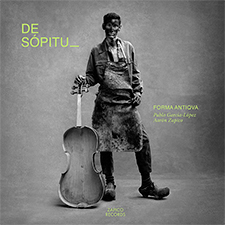
DE SÓPITU: The music that belongs to us
De sópitu is an Asturian expression that means ‘suddenly’; it’s something that arrives out of nowhere, without warning. Without expectation.
For us, De sópitu is a concert programme, an album, a performance style. It was also a moment of desperation, a dead end, a burst of inspiration and a learning experience.
De sópitu has been and continues to be many things. Right now, it‘s pure emotion and adrenaline, as we count down the days until this album is released, handled and heard.
De sópitu was conceived many years ago, even if it didn’t yet have that name. If I remember correctly, it started in The Hague, while I was studying the harpsichord. I spent countless hours in the conservatory library, immersing myself in the works of William Byrd, the English virginalists, early Italian manuscripts of hypnotic dances and elaborate French pastorals. Those scores had a deeply rooted folk element that, despite the centuries and distance, felt surprisingly familiar—like something I had already lived. At the time, I didn’t fully understand it, and I wasn’t interested in solving the mystery. Now, over twenty years later, I realise that those feelings were the seeds of this project.
The sense of connection to certain pieces has never left me, growing stronger over the years. There’s a bond between me and music from three centuries ago that I can’t quite put into words, but I know it‘s there. I find it in various composers, musical forms and genres. I also see it in the work of French and English colleagues, who explore this connection and bring it to life with such enthusiasm. Their efforts fill me with admiration, and I long to do the same with my music, though I hardly knew where to begin.
This urge lay dormant for years, pushed aside by a whirlwind of heritage preservation projects, major repertoires, the occasional opera or cantata and countless instrumental recitals. I needed time and someone to help me start. Or at least, someone who would understand.
It was only natural that, one day in March 2016, Ismael González Arias would validate my thoughts as we had coffee in his living room in Mieres. I had spoken countless times with his daughter, Sara, about what sparked this connection and the guidance I needed. I arrived with countless questions and left with just as many answers, even more questions, and a few songbooks. I admit, I felt somewhat disheartened by my lack of knowledge about my own region’s folklore. Perhaps that’s why I filed away the material, labelling the folder barrocu in huge letters and shelving the project.
It took a global pandemic for me to open that folder again. Rehearsals, concerts, commissions and restorations all vanished. The present needed to disappear for time to return. I had nothing on the horizon, but I wanted to keep my creative spirit alive, to stay sharp. So I opened the folder and began working, slowly and steadily. I read through piles of music, singing and playing, taking notes and cataloguing everything I could get my hands on. I ended up filling three or four folders with photocopies, clippings and notes. I loved everything I came across and enjoyed going through the material. It all felt so close, almost tangible. Then the pandemic ended, and normal life slowly returned. Real life crept back in, and those folders went back on the shelf. This time, I tied them up with a rubber band and stuck a piece of paper on top that said De sópitu in big, bold letters.
And I began to spread the word. Because it all seemed so close, I felt like I just needed a small push to make it happen. And because I loved what I had seen and the potential it had. I love it. When I told Valentina Granados, director of the Santander International Festival, about it in 2019 after a whirlwind of Vivaldi concerts at her festival, she was enthusiastic, too. She promised she’d look into it. I trusted her and waited.
Two years later, she confirmed that the Santander International Festival would produce the programme, with two concerts planned for the 2023 edition. I remember discussing it while walking through Parque Dorado in Sama, my village, on a sunny November morning. I also remember the wave of anxiety that hit me when I realised I was selling something that, strictly speaking, didn’t exist yet. I had the material, the passion and the blind faith in my abilities, but nothing tangible to show. Finally, De sópitu became a priority. Six years had passed since that café conversation in Mieres.
I gathered more material, sought advice and received valuable input from colleagues like Héctor Braga, Miriam Perandones, Roberto Oliveira and Jorge Jiménez. I immersed myself in recordings of traditional singers and folk groups of all kinds. I downloaded songbooks, ballads and articles. At the same time, I continued selecting music, transcribing and harmonising dances and songs. There came a point when I knew I had everything. On a practical level, I had three folders: instrumental, vocal and a ‘leftovers‘ folder. Mentally, I felt I had all the information I needed. I knew everything I thought I should know. So why wasn‘t it working? Why didn‘t I have the programme ready? Why hadn’t I sent it to Santander, who had already asked for it three times? The reason was simple: it didn’t feel right. I don‘t know what was going on, but I couldn’t find the finishing piece. I couldn’t quite figure out why, but something was missing.
That something popped into my head while listening to The Dubliners, hitting me like a lightning bolt. It all clicked into place. Suddenly, I understood. I wasn’t missing a specific piece, a particular accompaniment or a particular instrument. It wasn’t about how many times a piece should be repeated or how they linked in the programme. No, it wasn’t any of that. The answer had been right in front of me, hidden within the lyrics, the songs, the dances and the ballads I’d listened to. It was all about the attitude towards this music, about how you confront uncertainties and confirm certainties. It was about playing as if the music belonged to you.
De sópitu is the music that belongs to us.
Thanks to Ismael and Sara for their love, trust and crucial help in launching and completing this project. To Héctor Braga for his time and boundless generosity. To Jorge Jiménez, Miriam Perandones and Roberto Oliveira for their wise guidance. To Valentina Granados for her trust and to the Santander International Festival for their unwavering support for this and other projects. To Ricardo Villoria for his talent and dedication. To Xurde Álvarez for his deep sensitivity to our music.
Aarón Zapico
Recordings
The most extroverted character of the Spanish 'tonadilla' in the 18th century.
Splendor in the cathedral of Oviedo
Symphonies. Madrid, 1753
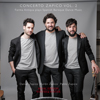
Forma Antiqva plays Spanish Baroque Dance Music

Ernst Reijseger | FORMA ANTIQVA | Aarón Zapico
Chamber duets by Agostino Steffani for soprano and countertenor
Opera music from Monteverdi to Mozart arranged as instrumentals by Aarón Zapico, Daniel Zapico and Pablo Zapico
Il Cimento dell’Armonia e dell’Inventione
The Contest between Harmony and Invention
Forma Antiqva plays Baroque Dance Music
Cantatas for alto and instrumental works by Georg Friedrich Händel
Cantatas for soprano solo and continuo by Domenico Scarlatti
[out of stock]
Villancicos, saynetes, cantadas... y una batalla
Italian music of the seicento
Live concert DVD recording